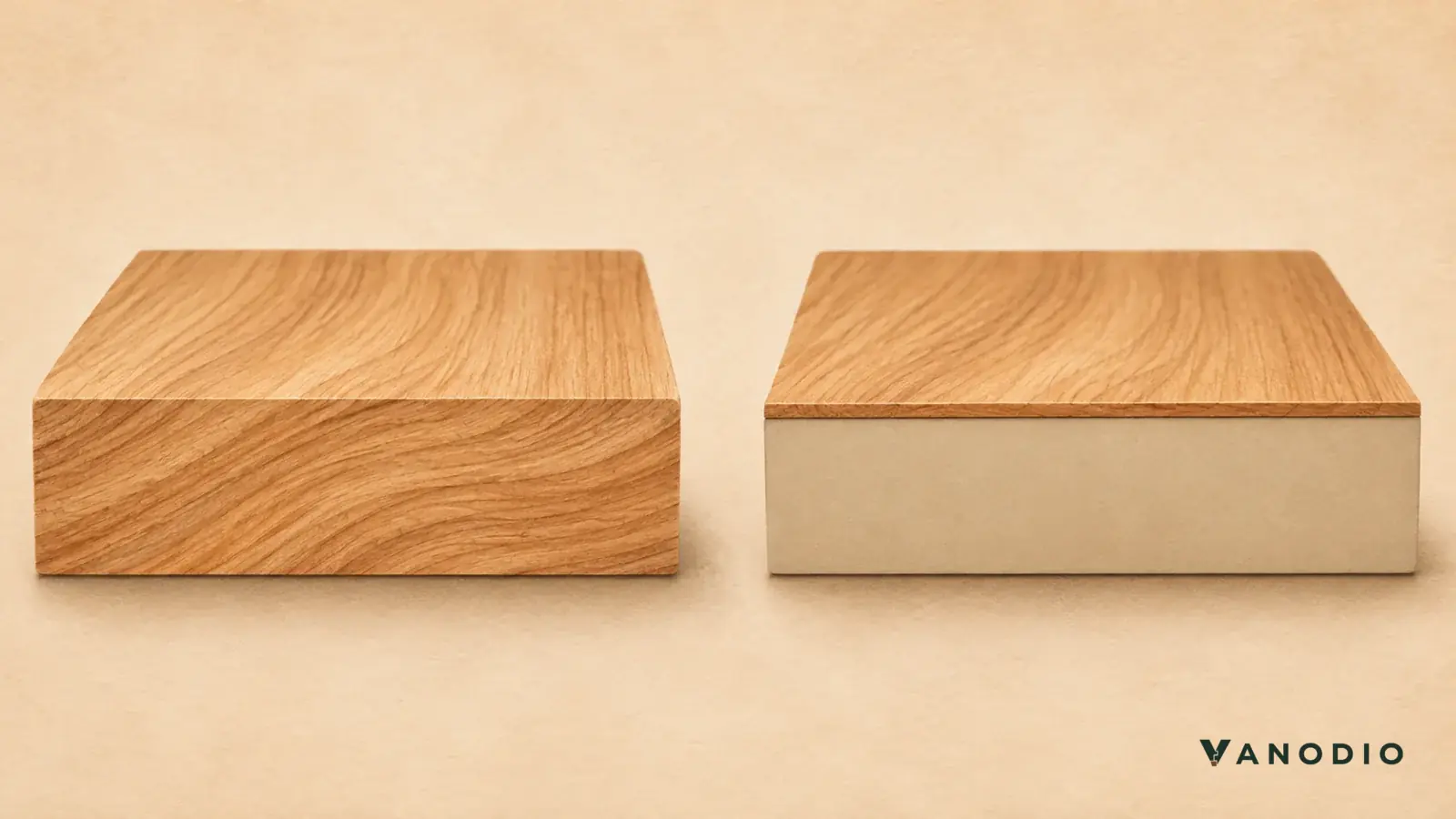
A gap, seam, or change in fit is worth documenting, but it does not identify its cause or prove whether the furniture is defective. Wood can change dimension as its moisture content responds to the surrounding air; what you see depends on the particular wood, component, grain direction, and construction. Record the part, the timing, what changed, and whether the furniture still functions as expected. Then ask the maker about that specific piece instead of trying to diagnose or adjust it yourself.
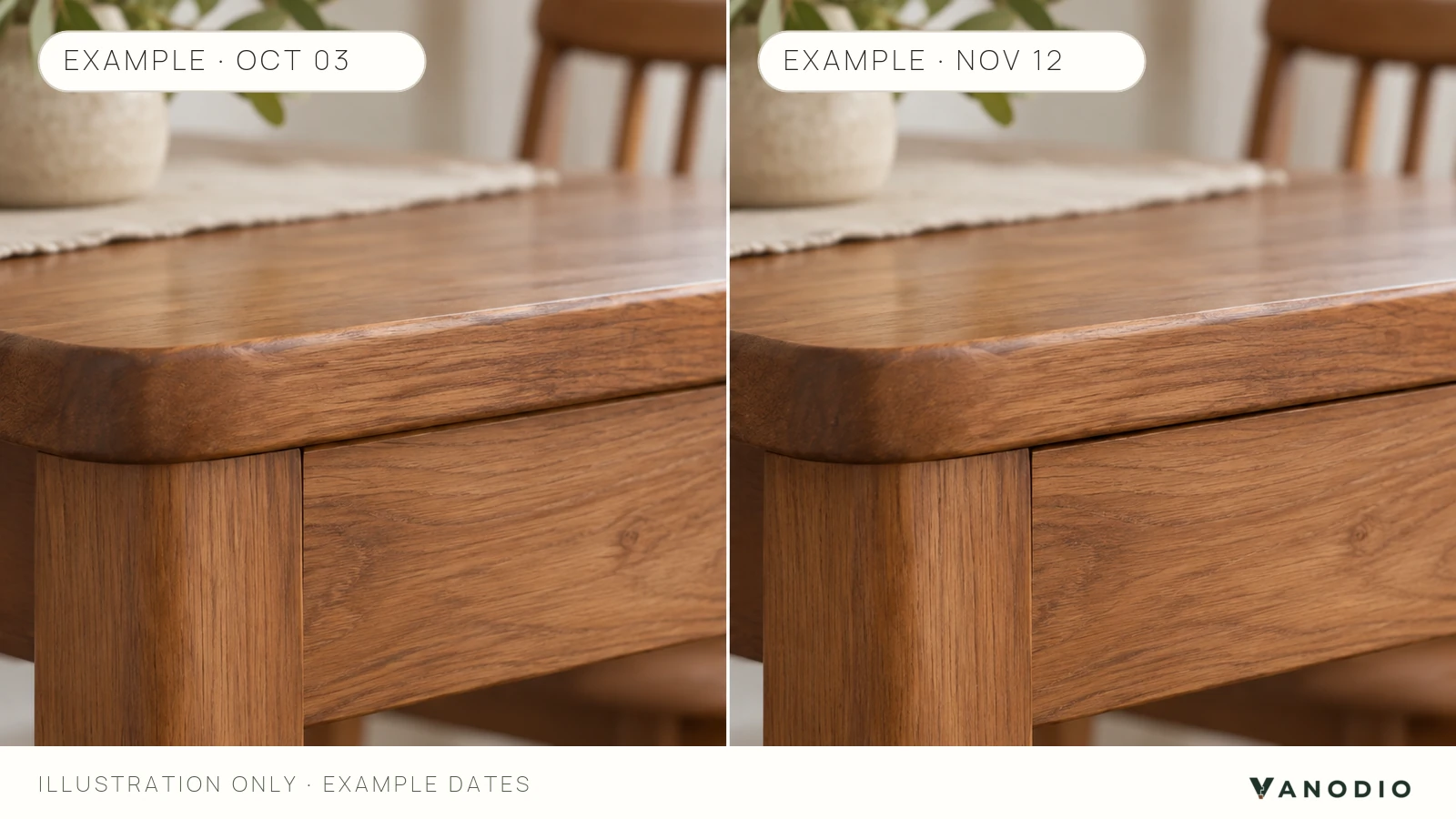
Wood takes on or loses moisture in response to the surrounding air. As its moisture content changes, its dimensions can change too; the direction and amount depend in part on the wood and how each part is oriented and built. A finish may slow moisture exchange, but it does not stop it. Purdue Extension’s furniture guide explains these general material behaviors; it does not provide a universal pass/fail rule for every furniture item.
The useful next step is a clear record, not a guess about humidity, workmanship, or warranty coverage. A photo can show a visible seam or a drawer that no longer moves the way you remember. It cannot reveal the full construction or, by itself, settle what caused the change.
Why a visible change is not a diagnosis
A wooden part may respond to changes in the moisture around it. But furniture is made from parts with different shapes, grain directions, finishes, and connections. Those details affect how a change appears at a joint, panel, edge, or opening. Two pieces can therefore show different visible details without those details having the same explanation.
Timing is useful context. You may first notice a change after moving a piece, changing how a room is heated or cooled, or returning to it after a season. Record what you know and what you do not know. The timing may help the maker understand the situation, but it does not prove that a room condition caused it.
Do not label a gap “normal,” “damage,” or “a defect” based on appearance alone. Those conclusions may depend on the exact design, materials, assembly, finish, history, and the maker’s documentation. This guide does not set acceptable gap sizes, humidity targets, or a universal movement tolerance.
Start with the furniture and the exact part
Before taking photos, identify the item as clearly as you can without guessing. Note the product name or order reference if you have it, when you acquired it, and the room where it is used. If a detail is unknown, write “not known.” Do not infer a species, solid-wood construction, finish, or internal joint from the appearance of a surface.
Next, name the location in plain language: for example, “left side of the top near the back corner” or “the upper drawer on the right.” Use the same description each time. If the furniture has multiple similar parts, note which one you mean. This helps the maker compare your description with the construction information for that item.
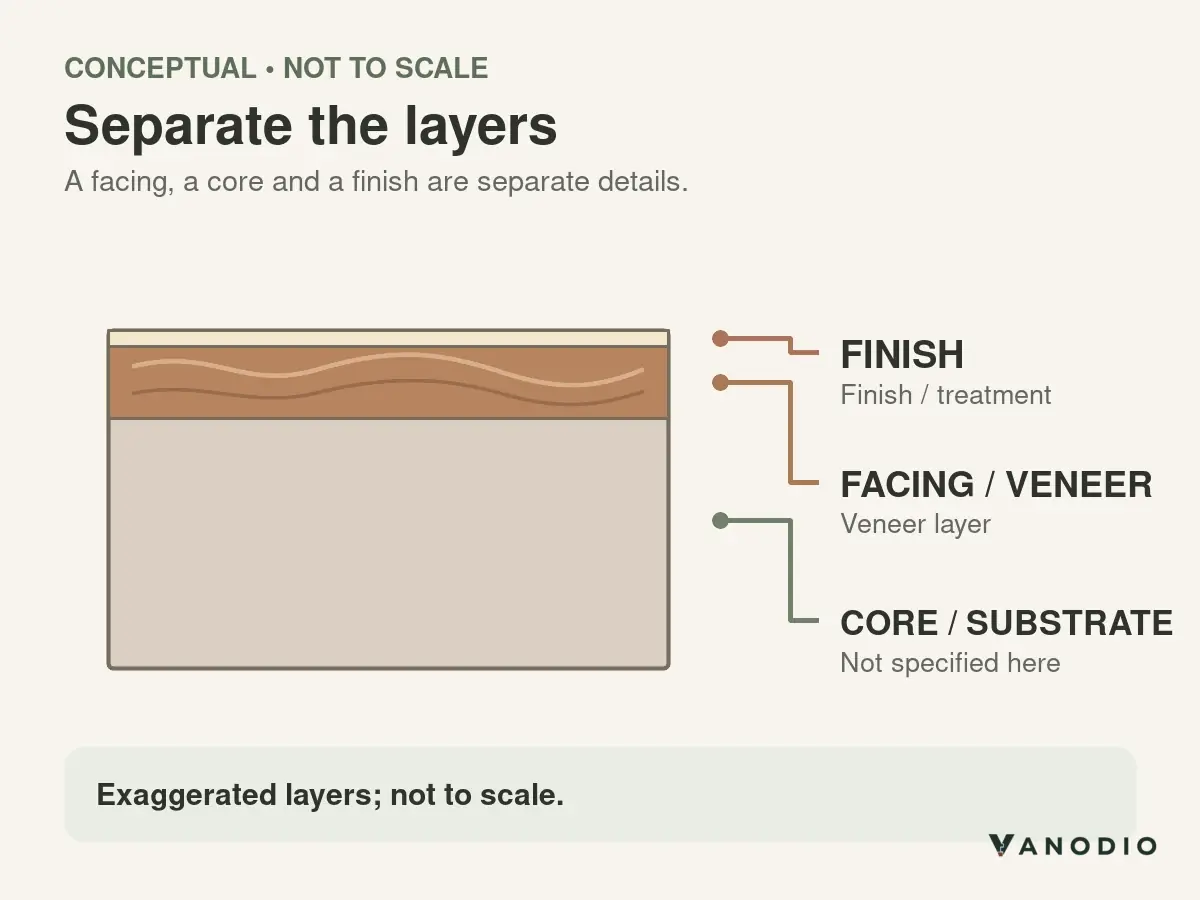
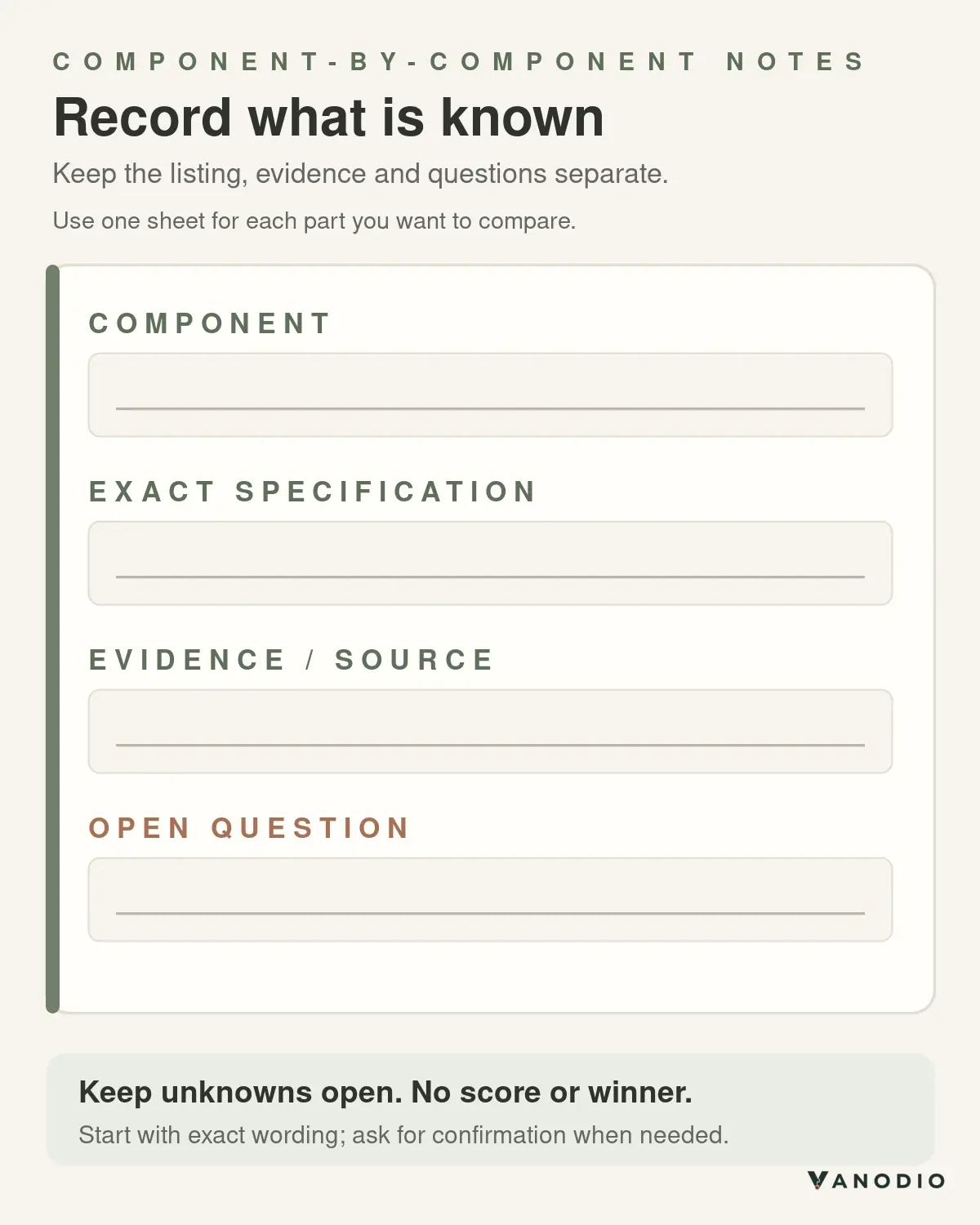
If you are also comparing construction descriptions before buying another piece, our component-by-component guide to solid-wood and veneer furniture explains how to record what a listing actually specifies. That guide covers a different question; this one is about documenting a change in a piece you already have.
Keep a simple observation log
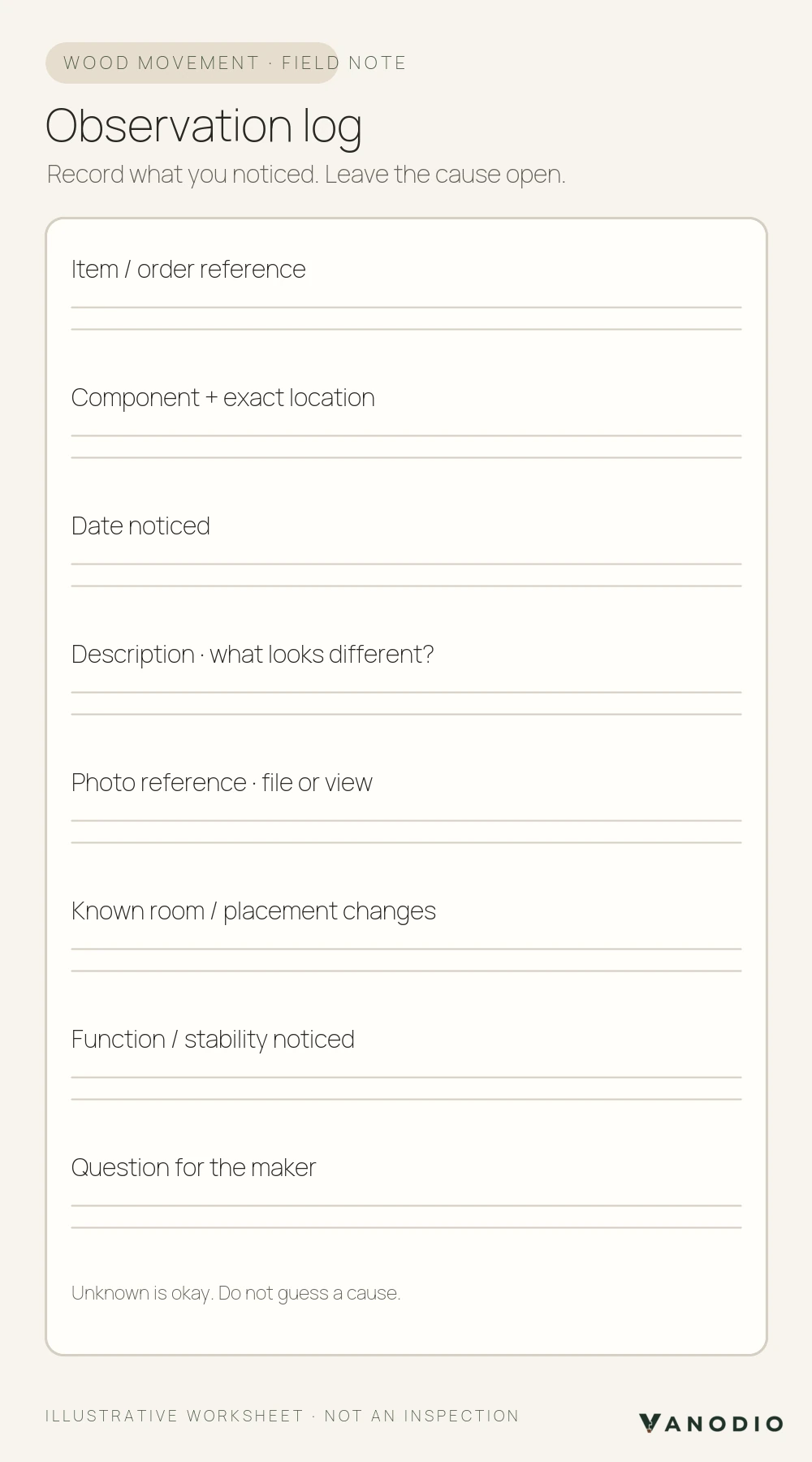
Use one row for each observation. Record only what you saw or experienced. Add a new date when you notice a change; there is no need to invent a check schedule or to force a part through its movement to see what happens.
| Field | What to record |
|---|---|
| Item reference | Product name, order reference, or “not known” |
| Component and location | The exact part and where the visible change appears |
| Date noticed | When you first saw it, and the date of each later observation |
| Description | What looks different, in neutral words; avoid a diagnosis |
| Photo reference | File name or short label for each photo and its view |
| Known room or placement changes | What changed, if anything; write “none known” or “not known” when appropriate |
| Function or stability | Whether opening, closing, support, or use has changed; describe what you observed |
| Question for the maker | The specific information or next step you need |
Keep an earlier photo if you have one. Do not edit it in a way that changes the visible detail. A brief caption such as “wide view, first noticed” or “same corner, later observation” is more useful than a conclusion like “humidity damage.” If you do not have an earlier photo, start with the present condition; do not recreate one by moving, tightening, or disassembling the furniture.
Photograph what you can see
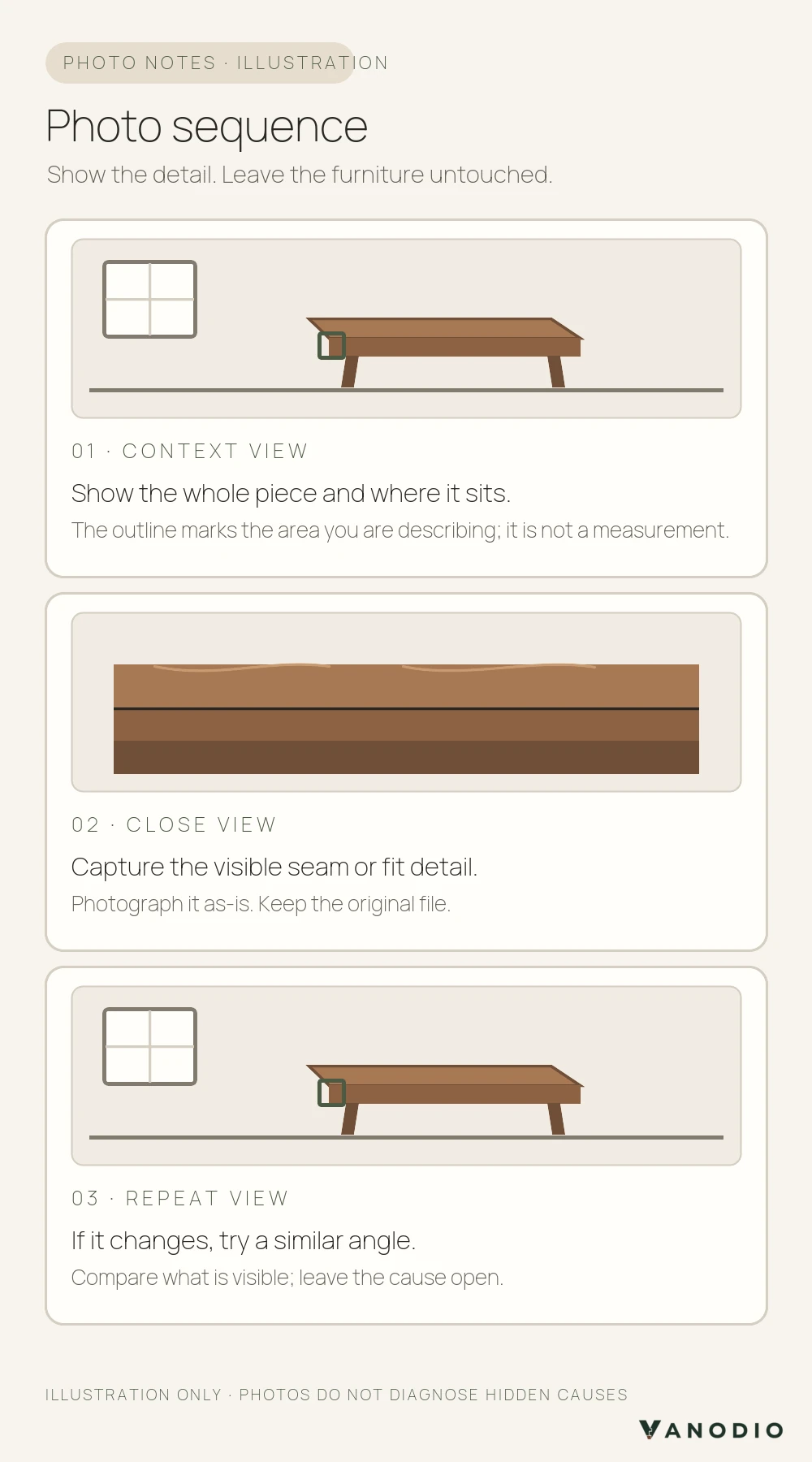
Take a wider view that identifies the furniture and the affected area, followed by a closer view that shows the visible detail. If you notice a change later, try to use a similar angle and lighting so the two views are easier to compare. Keep the original files and label them with their dates or log references.
Do not scrape, sand, scratch, pry, loosen hardware, remove a panel, or force a drawer just to make a photo clearer. Do not place weight on a questionable part as a test. Photos are documentation, not an inspection of hidden structure or a substitute for the maker’s assessment. If stability or function appears compromised, stop using the piece and ask the maker for guidance before trying anything else.
Two hypothetical examples
These examples are invented to show how to use the log. They are not Vanodio products, inspected furniture, or diagnoses.
Case 1: A seam looks different
Suppose you notice a visible seam near the back edge of a table top. Your log might say: “Nov. 12 — seam at the back-left edge looks more noticeable than in the photo from Oct. 3; no known change in how the table is used.” Attach a wide view and a close view from similar angles. If you do not know whether the seam was present before, say so.
That record does not show why the seam changed or whether it falls within the maker’s expectations. Ask the maker which additional details would help, whether the product has written guidance for this specific area, and what signs should prompt another contact. Do not try to close the seam or apply a product while waiting for an answer.
Case 2: A drawer’s fit feels different
Suppose one drawer now takes more effort to open than you remember. Identify the drawer, note when you first noticed the change, and describe the operation without forcing it. If you know of a nearby room or placement change, record it as context—not as the proven cause. A photo may show the drawer front and surrounding frame, but the maker may need information that a photo cannot show.
Ask whether the maker needs a short video or another view, and what to do if the drawer’s operation continues to change. Do not plane an edge, add wax or oil, tighten hardware, or adjust the drawer based on a generic online tip. If the change affects safe or normal use, stop using the piece until the maker advises you.
What to send the maker
Share the log, the original photos, and any item or order reference you have. Keep the note brief and specific. You can adapt this message:
I’m contacting you about [item or order reference]. I first noticed [visible change] on [date] at [component and location]. Since then, I have observed [what changed, if anything]. The function is [unchanged / changed in this way / not sure]. I have attached [photo labels] and know of [room or placement changes / no known changes]. Could you tell me what additional information would help, whether there is guidance for this exact item, and what I should do next?
If the maker asks for another angle, image, or detail, add it to the same record. If you have questions about care, ask for instructions that match the item’s materials and finish. Keep any response with the log so later observations can be understood in context. A maker’s guidance for its own collection should not automatically be applied to another brand or finish. For example, Neptune’s timber care guide is written for Neptune timber furniture and its named finishes; it is not a universal care standard.
Questions readers often ask
Does a gap mean the furniture is defective?
Not by itself. A visible gap is an observation, not a diagnosis. The maker may need the exact part, construction details, timing, photos, and information about whether the furniture still functions as expected. Ask about the specific item rather than relying on a universal tolerance that this guide cannot establish.
Should I adjust the piece before I contact the maker?
No. Do not alter, force, or apply a treatment to the affected area just to see whether it changes. First document the condition and follow the maker’s instructions for that exact item. If stability or function appears compromised, stop using the piece while you ask for guidance.
Does noticing a change in a particular season prove the cause?
No. Seasonal timing can be useful context because wood responds to moisture conditions, but timing alone does not identify what happened to one piece. Record when you noticed the change and any room or placement changes you know about, then leave the cause open for the maker to assess.
Make the next conversation easier
A dated record turns “something looks different” into a useful question: which part changed, when you noticed it, what evidence you have, and whether function changed. Keep the notes with the item information and ask the maker for guidance specific to that piece. If you are considering furniture, ask how the maker describes its materials and care instructions before you decide; do not treat a broad material label as a substitute for component-level information.