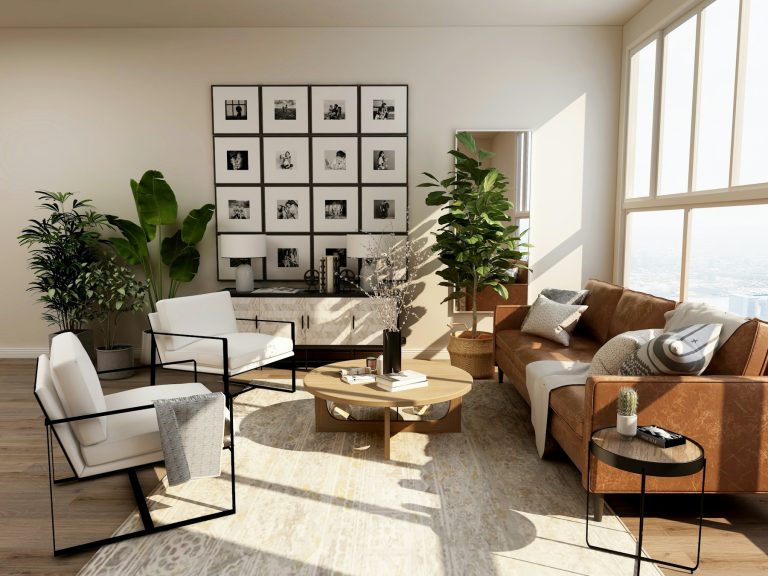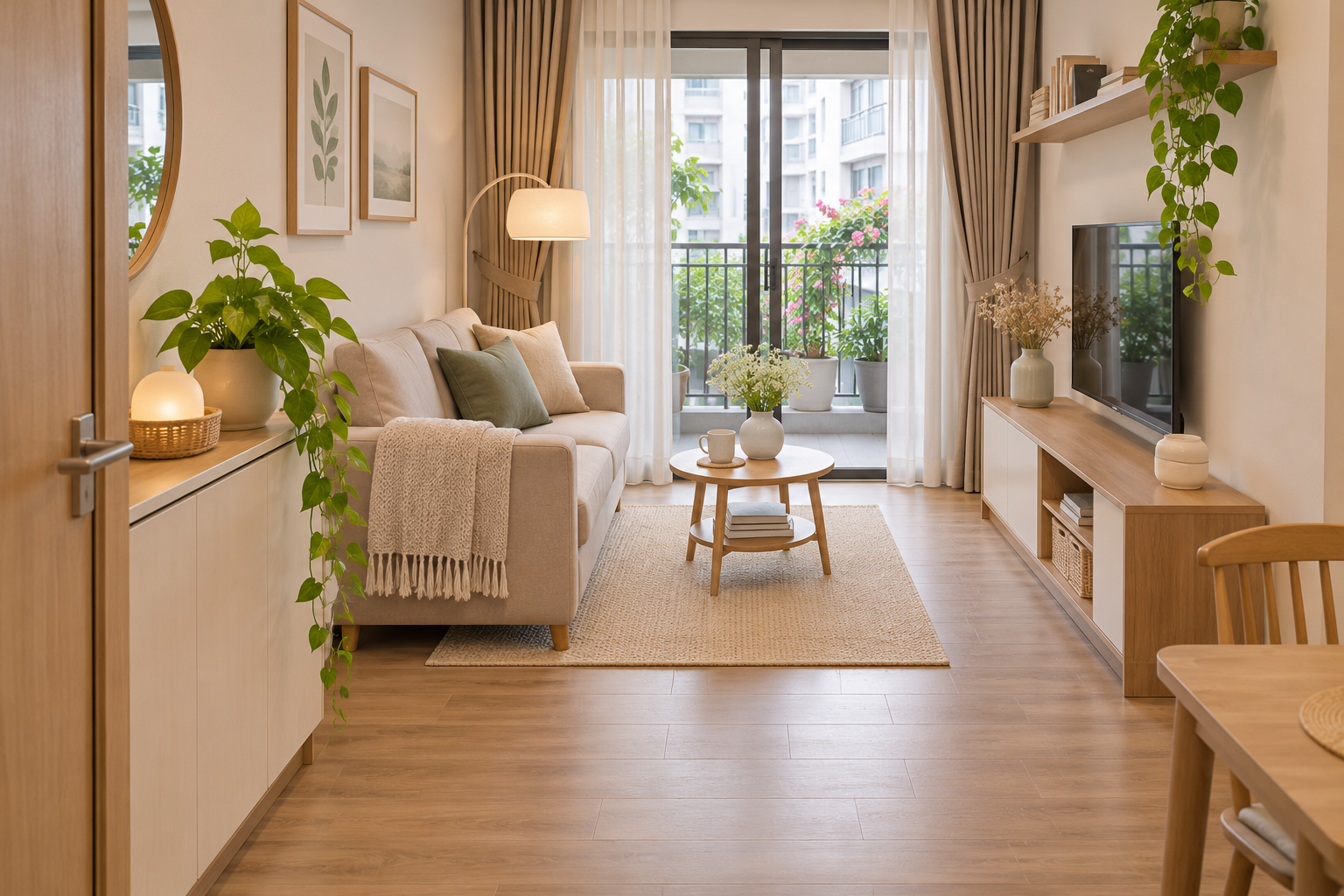
A coffee table can support a living room without becoming an obstacle. In a compact space, start with the seats, routes and everyday activities already in the room. Choose a table only after you understand how people move between the sofa, doorways and other furniture.
Map the seating and walkways first
Sketch the sofa, chairs, doors, windows and main walking routes. Note whether people need to pass between the sofa and the kitchen, balcony or hallway. The table should sit within comfortable reach of the seats while leaving a clear route through the room.
Mark the sofa and table footprints on the floor using tape or paper. Add space for knees and for people to stand up from the sofa. Walk the route at the busiest point of the day before settling on a shape or size.
Choose a shape around the room
A rectangular surface can align with a longer sofa, while a round or oval outline may suit a layout where people pass around the ends. These are starting points rather than rules: the shape still needs to fit the room and the way it is used.
Consider the corners, nearby children or pets and how often people move around the table. Check that a table does not collide with a recliner, chair legs or a door when those pieces are in use.
Decide what the table needs to hold
List the items that normally stay in the room: a remote, a book, a tray or a game. If you need hidden storage, check how drawers or doors open and whether they interfere with seating. If the surface is mainly for occasional use, a lighter-looking or smaller table may be enough.
Do not assume an open shelf will stay tidy or that a storage compartment will be easy to reach. Consider cleaning access and how the table will be moved when vacuuming or rearranging the room.
Compare surface care and daily use
Ask how the specific finish should be cleaned and what care it needs. Think about hot cups, spills, sunlight and frequent handling in your household. Read the care guidance for the exact item before buying; different materials and finishes can have different needs.
Check the fit before ordering
- Mark the planned tabletop and leg positions on the floor.
- Check the route between the seats and through the room.
- Test doors, drawers, recliners and nearby cabinets.
- Confirm finished dimensions, material and care for the exact item.
- Ask how the item will be carried through the entrance and hallway.
Frequently asked questions
Is a round coffee table always better in a small room?
No single shape works for every layout. Compare the actual footprint, corners, seats and walking route in your room before choosing.
Should a coffee table have storage?
Choose storage only if it suits the things you keep nearby and can be reached without blocking a seat or walkway. Open space around the table can be more useful than extra compartments.
Room images on this site are illustrative concepts and do not show confirmed product specifications.