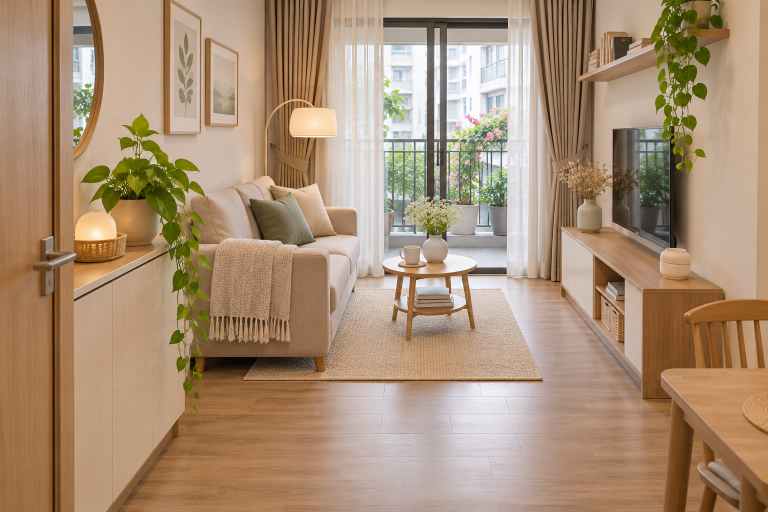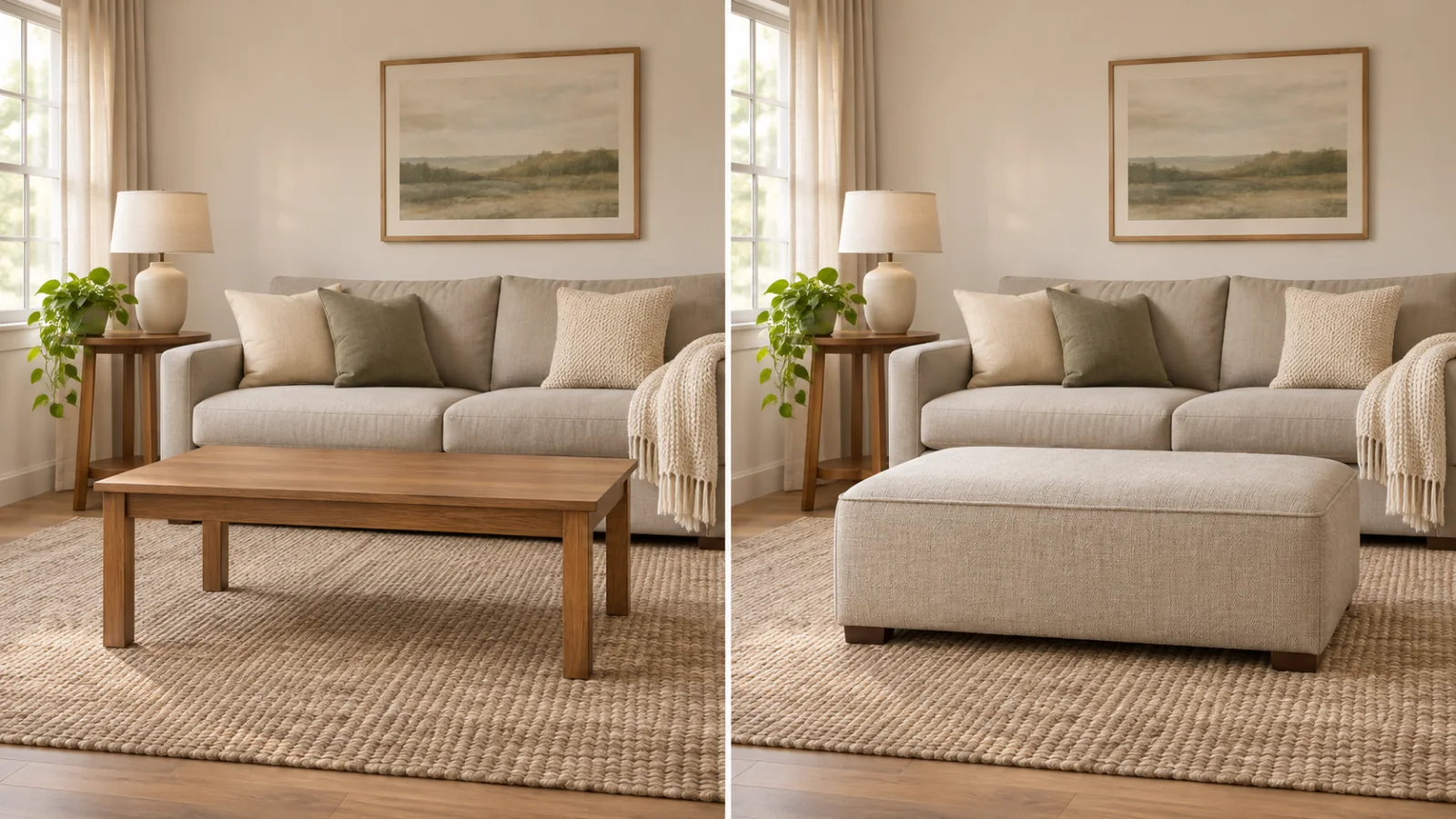
The better choice depends on what your household does around the seating area most often. A coffee table is usually the more direct choice when you need a firm place for books, game pieces or other everyday items. An ottoman may suit a feet-up routine, and some designs add storage or other uses. Check the instructions for the exact piece before relying on any secondary use.
If both jobs matter, decide which one needs to work every day. A tray can give an ottoman a more defined surface, but it does not turn upholstered furniture into a hard tabletop. The goal is a setup that fits your routine, not a universal winner.
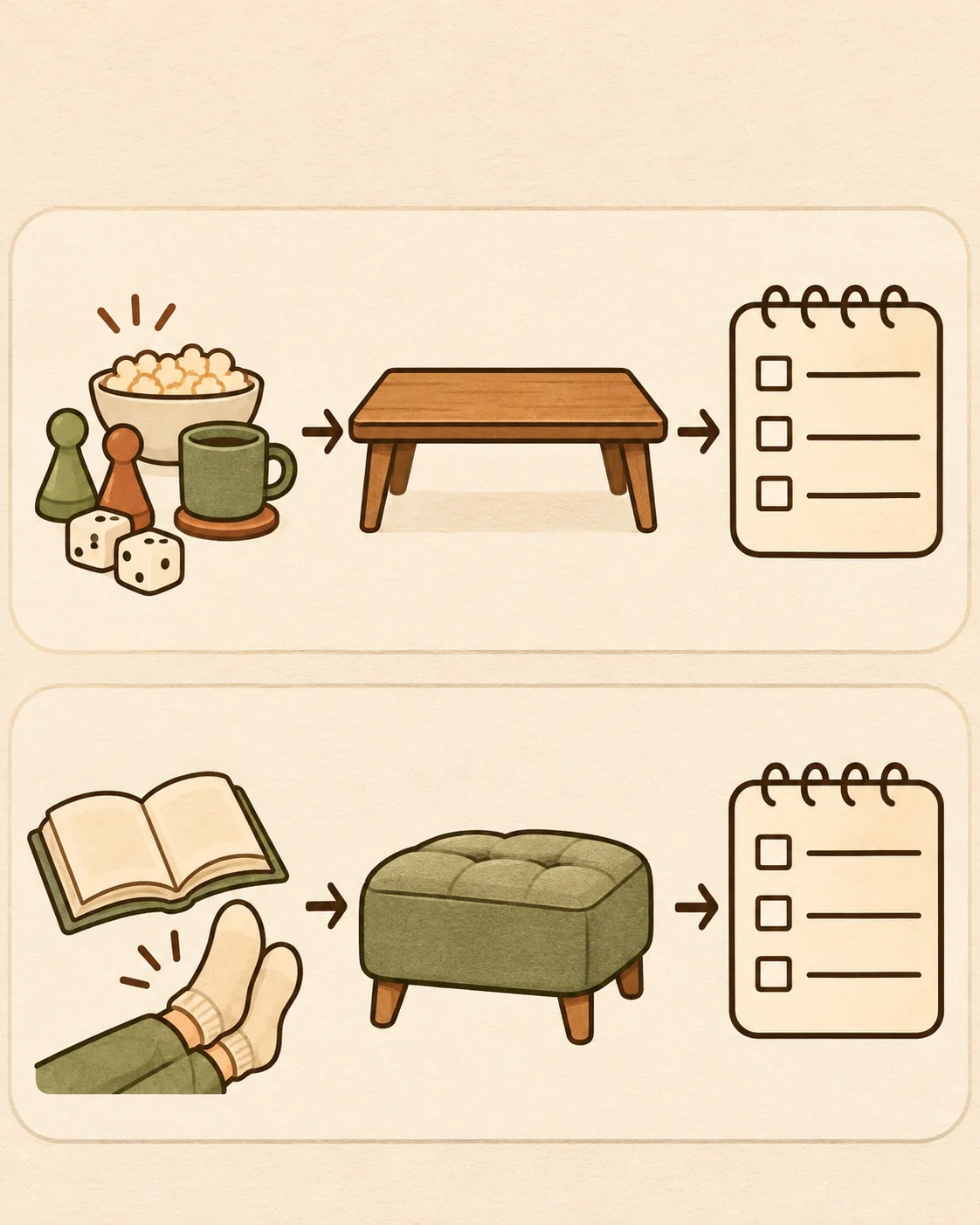
Illustrative room concepts; neither scene depicts a confirmed Vanodio product.
The main difference is the job each surface does
A coffee table centers a seating area around a firm top. An ottoman has an upholstered or cushioned top and may be designed for foot support. Extra functions such as storage or occasional seating depend on the specific model. A U.S. comparison guide from Koala describes the same broad trade-off between a firm tabletop and an ottoman’s comfort and design-dependent uses; treat it as category guidance, not a test of any individual product. Read Koala’s comparison.
| What you need | Coffee table | Ottoman | What to verify |
|---|---|---|---|
| A firm place for books, game pieces or small items | Often the simpler fit because the top is designed as a tabletop. | Upholstery may be soft or uneven; a tray can add a defined surface. | Check the exact top, tray support and maker’s instructions. |
| A place to rest your feet | A tabletop does not provide the same cushioned footrest function. | A footrest-style design may suit this use. | Confirm the maker’s intended uses for the specific piece. |
| Occasional seating | Do not treat a tabletop as a seat. | Some ottomans are designed for sitting; others may not be. | Use it as a seat only when the manufacturer explicitly permits that use. |
| Hidden storage | Some tables include a shelf or drawers; others do not. | Some ottomans have a storage compartment; others do not. | Check the listing and how the storage opens before deciding it meets your need. |
| Cleanup after daily use | Care depends on the table’s finish and material. | Care depends on the upholstery and any removable parts. | Follow the instructions for the exact item. Do not assume one cleaning method fits all. |
When a coffee table makes more sense
Start with a coffee table if the center of the seating area regularly needs to hold items on a firm surface. That may include a board game, books, a notebook or refreshments. The point is not that every table handles every task; the specific top, size and care instructions still matter.
A table may also be a better match when you want one clearly defined place for things people share. Before choosing a model, check whether it has only a top, an open shelf or enclosed storage. Do not assume a storage feature from the product category or from a room photograph.
The trade-off is that a hard tabletop does not replace a cushioned footrest. If feet-up comfort is also part of the routine, decide whether another piece belongs in the room or whether an ottoman is the more useful primary choice.
When an ottoman makes more sense
An ottoman may be a better starting point when the seating area is mostly used for relaxing and the household wants a cushioned place to rest feet. Confirm that the individual design is intended for that use. If you also expect people to sit on it, check the manufacturer’s permitted uses rather than inferring that from its shape or upholstery.
Storage is another model-specific feature. If you need a place for blankets or other items, verify that the exact ottoman has a compartment and that you can open and reach it in the intended position. “Ottoman” by itself does not tell you whether storage is included.
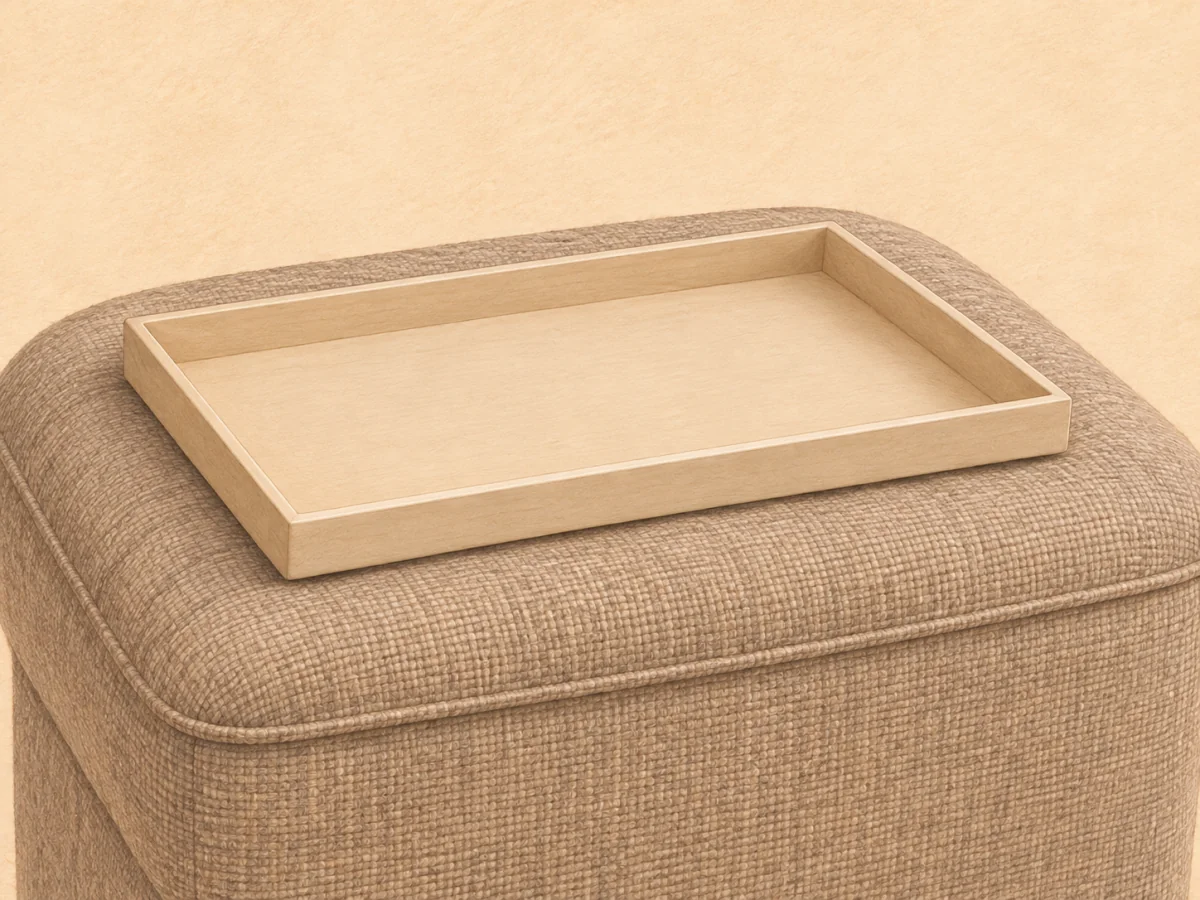
The main compromise is the work surface. Upholstery is not the same as a firm tabletop. A tray can gather a book, remote or other small items in one place, but it may shift or sit unevenly depending on the tray and upholstered top. Check that the tray’s base and the actual ottoman surface are flat enough for it to sit as intended, and follow the product instructions. A tray is not proof that a drink cannot spill or that liquid will stay away from the fabric.
If surface stability is important, keep a separate firm surface available or choose a table as the primary piece. Do not rely on an ottoman-and-tray setup to perform a task the specific products are not designed to handle.
Two evening routines, two different starting points
These are hypothetical examples to show how the worksheet works. They are not Vanodio customer stories, product tests or evidence about a particular item.
Routine A: games and shared items. The household often plays a board game and leaves a book or remote within reach. A coffee table is the clearer first option because the routine repeatedly asks for a firm shared surface. Before deciding, check that the selected table’s actual footprint works in the room and review its care instructions.
Routine B: reading and putting feet up. The household mostly reads or watches a show and rarely needs a central surface. An ottoman designed for foot support may fit that routine better. If it will also hold items, test the intended tray on the actual kind of support surface and verify the maker’s guidance. If occasional seating or storage matters, verify those uses separately.
The point is to choose around the activity that recurs, then check the real product and room. A list of possible features is less useful than knowing which function would be missed most often.
A fill-in worksheet for choosing
Use this before comparing product pages. It is a planning aid, not a scored test or a substitute for product instructions.
- Main activity: What do people most often do around this seating area?
- Items that need support: What needs to sit on a firm, shared surface?
- Feet-up use: Would a cushioned footrest be used regularly? Which specific designs are intended for it?
- Seating: Is occasional seating part of the plan? What does the manufacturer permit for the exact item?
- Storage: What would be stored, and can the compartment be reached in the planned position?
- Care: What instructions apply to the actual tabletop finish or upholstery?
- Footprint: Mark the candidate piece’s footprint on the floor with paper or tape. Sit, stand and walk the routes you use most. No single spacing number can account for every room and routine.
- Open questions: Which dimensions, included parts, uses or care details still need confirmation?
| Fill this in | Your notes |
|---|---|
| Activity that happens most often | ______________________________ |
| Items that need a firm surface | ______________________________ |
| Footrest, seating or storage uses to verify | ______________________________ |
| Care instructions to review | ______________________________ |
| Footprint and routes tested | ______________________________ |
| Questions to ask before ordering | ______________________________ |
If your open questions are mostly about whether the piece fits the room, use Vanodio’s existing guide to plan the table footprint in your room. That guide covers layout and circulation; this comparison is about choosing between a hard tabletop and an upholstered piece.
Questions to confirm before you choose
- What uses does the manufacturer permit for this specific item?
- Does the item have storage, a tray or other parts, and are they included?
- If a tray will be used, is its base and the actual support surface flat enough for it to sit as intended?
- What care instructions apply to the exact finish or upholstery?
- What are the finished dimensions and footprint, and can you check them against your seating area?
Choose the piece that supports the activity you repeat most often, then confirm its uses and care in the product information. If neither option covers the routine without an assumption, keep the question open until the seller or manufacturer confirms the missing detail.